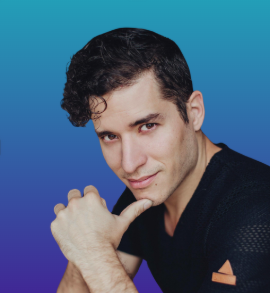
Jesse Lopez is a US Open Champion and the founder of BLC. He's
been competing on the WCS circuit since 2011 and teaching since
2013 — accumulating more than 3,400 private lessons taught across
28 cities along the way.
Along the way he developed a framework that treats West Coast
Swing like a spoken language — a set of vocabulary and grammar
that students can study, drill, and use to improvise. The Body
Language Curriculum is the formalized version of that framework.
It's how he teaches every private lesson today.
Jesse teaches privately in Kansas City and online globally. He
also runs the BLC Teacher Training cohort each spring, mentoring
working instructors in the methodology.
He believes WCS retention is broken because the dance is taught
as a list of patterns instead of as a language. Most of his work
is aimed at fixing that.
Specialties
Musicality & phrasing for competition
Anchor mechanics & momentum diffusion
Lead technique & connection design
Curriculum design for studios & teachers
Strictly Swing & routine coaching
Teaching style
High-context, language-based. Expect to leave with vocabulary you
can actually use the next time you social dance — not just a
memorized routine.